Data as Evidence
SS2700
Foreign Born Population Differences Throughout the United States
The United States has more foreign-born residents than any other country in the world. In this case, a foreign-born resident is anyone who is not a U.S. citizen. In the United States, over 40 million people were born in another country. This can be seen in the graph shown below. It is a country that was originally built up from migrants and is continuing to grow. The immigrant population in the United States is very diverse, with residents representing almost every country in the world. In 2017, migrants that came to the United States accounted for about one-fifth of the world’s migrants.

Some variables to take into consideration while discussing foreign born residents in the United States include the difference in the ratio between foreign born and native-born residents, how it has changed over time, where the majority of immigrants come from, and the location they majority reside in. Below is a map of the percentage of foreign-born residents in the United States from the ACS 2018 (5-Year Estimates) data.
Total Population: Foreign Born
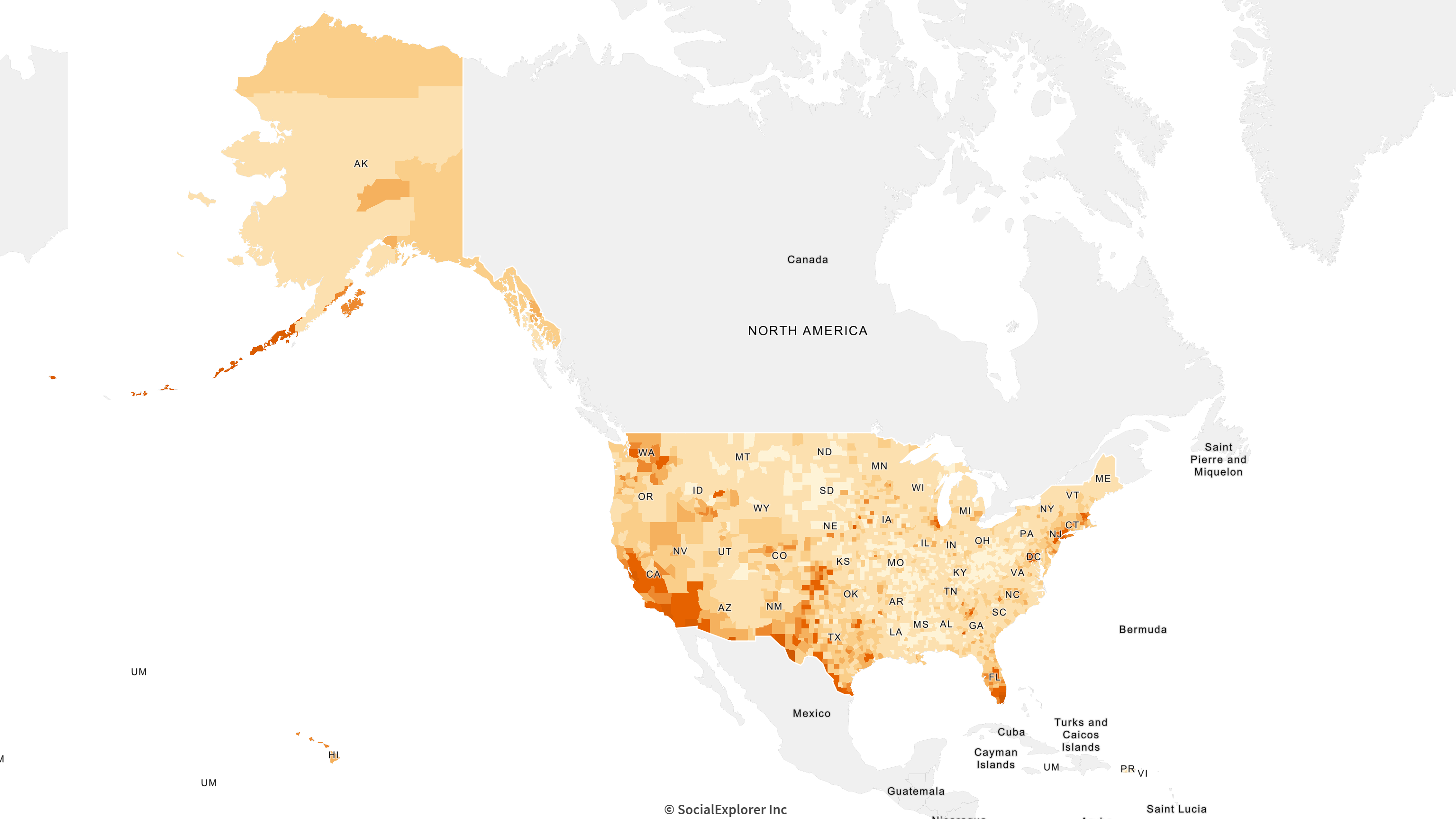
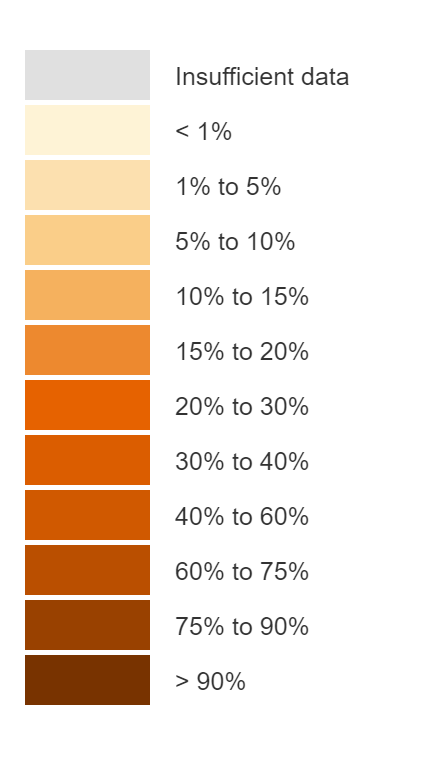
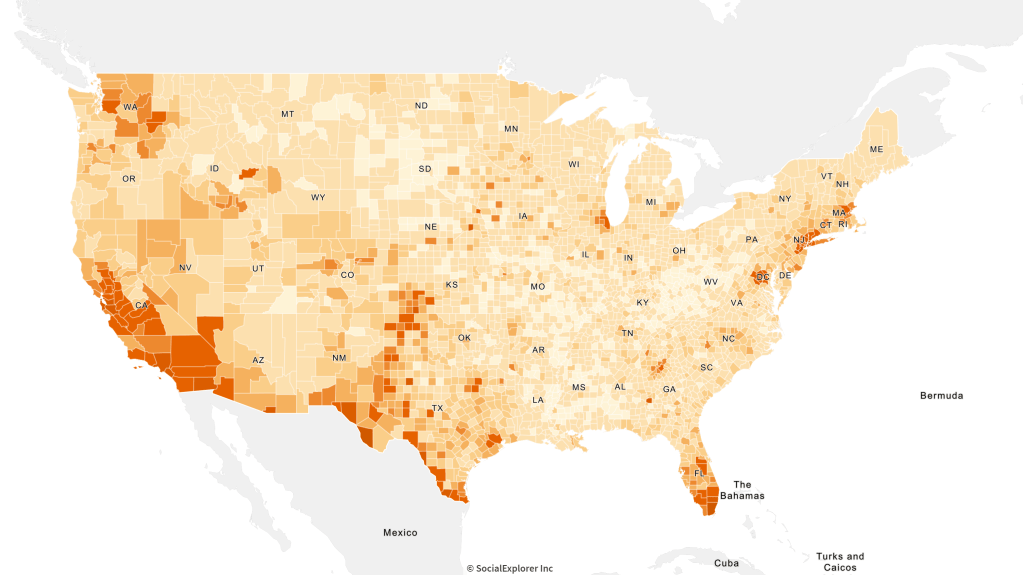
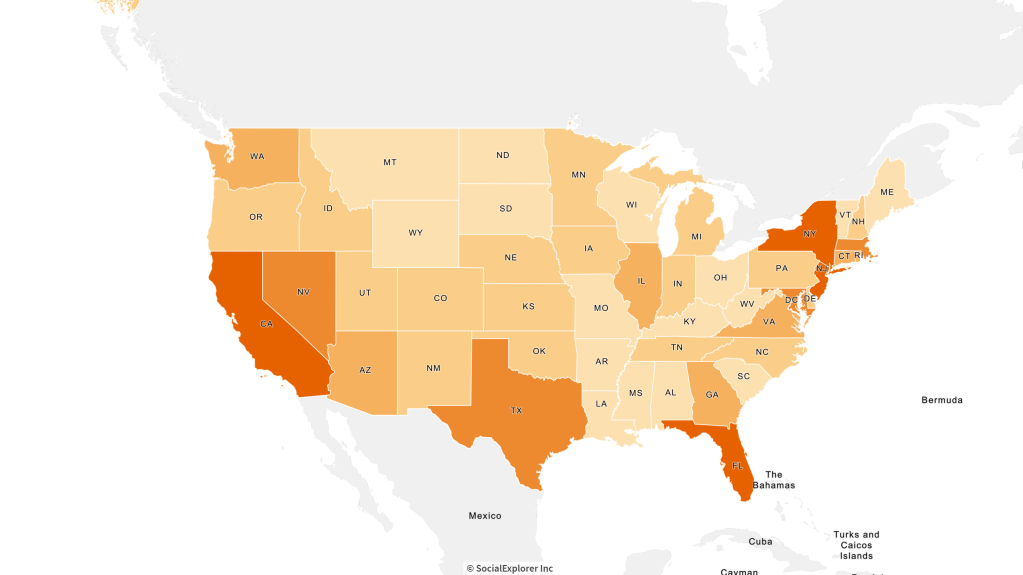
Foreign born residents on a percentage base of the total population
As you can see from the map, a high concentration of the United States foreign born population live in large cities and in states along the coastline such as California, Texas, Florida, New York, and New Jersey. I would hypothesis that this is because bigger cities are portrayed through the news, television, social media, and through stories as having great opportunities. Those moving to the United States, seeking employment, are likely to move to states including these metro areas as they believe they can find employment and housing easiest there. States that include more rural areas are not as often portrayed on the news as having “great opportunities.” Due to that, immigrants may not look into living there or even consider those states all together. The majority of the states that have a large foreign resident population are along the coastline or near larger airport terminals. This may be caused because of easier traveling, or the wish to settle where they first end up after the move to the United States.
Pew Research Center states, “Roughly half (45%) of the nation’s 44.4 million immigrants live in just three states: California (24%), Texas (11%) and New York (10%). California had the largest immigrant population of any state in 2017, at 10.6 million. Texas and New York had more than 4.5 million immigrants each.” If you look at individual cities, you will find that metro areas’ population growth is due mostly from immigrants. By looking at the data table below, you can see some of the statistics of population growth in metro areas due to immigrants.
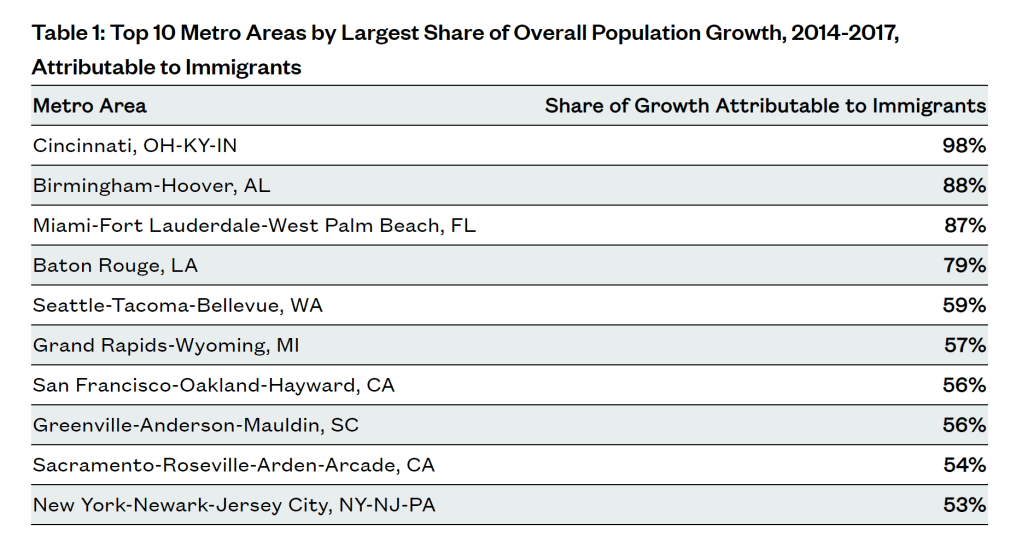
By looking at the table you can see the impact that immigrants have on the population growth in the selected cities. The population growth of many states including metro areas have increased due to immigrants moving to larger cities. Foreign born residents bring in their new and diverse perspectives to these areas, along with skills, technology, and spirit for work to these areas. They help with economic growth for all residents in the area. Often, immigrants will move to the United States for a specific reason including higher education, health, economy, career opportunities, living space, science and technology, and more. In the metro areas, we see an increase in the number of foreign-born residents as there are more career opportunities. This supports my claim of people moving to the United States seeking employment.
The employment sector has a direct correlation with the number of foreign residents. For example, California has an employed civilian population for 16 years or older of 18,309,012 people and a foreign resident count of 9,445,023 out of a total population of 39,148,760 and a foreign resident count of 26.92%. New York has an employed civilian population of for 16 years or older of 9,445,023 out of a total population of 19,618,452 and a foreign resident count of 22.63%. However, even though there are more people employed in these states, there is also a greater total population. When moving to the United States, many people may overlook the fact that this is by number and not by ratio. When looking at the ratio of employed residents to the population of each state, many of the states that don’t include larger cities also have significant number of employed residents.
There are many alternative potential causes for why the states along the coastline have a greater percentage of foreign-born residents to natural born residents so testing my hypothesis would be difficult. In order to test the explanation foreign residents moving to the coastline state because they are seeking employment in metro areas could be further tested by doing a case study by going into immigration services and observing how they treat people and the information they have on the topic. Looking further into the data provided by the Census would be of help too. I could compare employment and unemployment rates with foreign born residents along with the cost of living in a given area, looking at differentials between states containing metro cities or rural cities. I have no evidence to support causation, but the explanation I provided has correlation with the topic. It will take different, and more data to really dig into this question and determine the causation.
ACS Report. Total Population: Foreign Born, 2018. Prepared by Social Explorer. (accessed Jul 27 13:58:03 EST 2010).
ACS Report. Employment Civilization Population 16 Years and Over, 2018. Prepared by Social Explorer. (accessed Jul 27 13:58:03 EST 2010).
“Immigrants and the Growth of America’s Largest Cities.” New American Economy Research Fund, research.newamericaneconomy.org/report/immigrants-and-the-growth-of-americas-largest-cities/.
Radford, Jynnah. “Key Findings about U.S. Immigrants.” Pew Research Center, Pew Research Center, 17 June 2019, http://www.pewresearch.org/fact-tank/2019/06/17/key-findings-about-u-s-immigrants/.
Follow My Blog
Get new content delivered directly to your inbox.
 Laura's Blog